
Single photon emission computed tomography (SPECT) is an advanced nuclear imaging test that creates 3D pictures of your heart. It helps identify how well your heart is pumping, whether blood flow is reduced in certain areas, and how your heart responds to treatments, guiding prevention and personalized care for your long-term health.
Capture Detailed Images of
Your Heart
Single photon emission computed tomography (SPECT) is a specialized nuclear imaging test that produces 3D images of your heart. By injecting a small amount of radioactive tracer into your bloodstream, our cameras detect gamma rays as the tracer flows through your heart. This allows us to clearly visualize blood flow, measure how well your heart is pumping, and detect areas that may not be receiving enough oxygen-rich blood. SPECT is painless, noninvasive, and provides valuable insight for accurate diagnosis and treatment planning for patients seeking single photon emission computed tomography (SPECT) in Los Angeles.
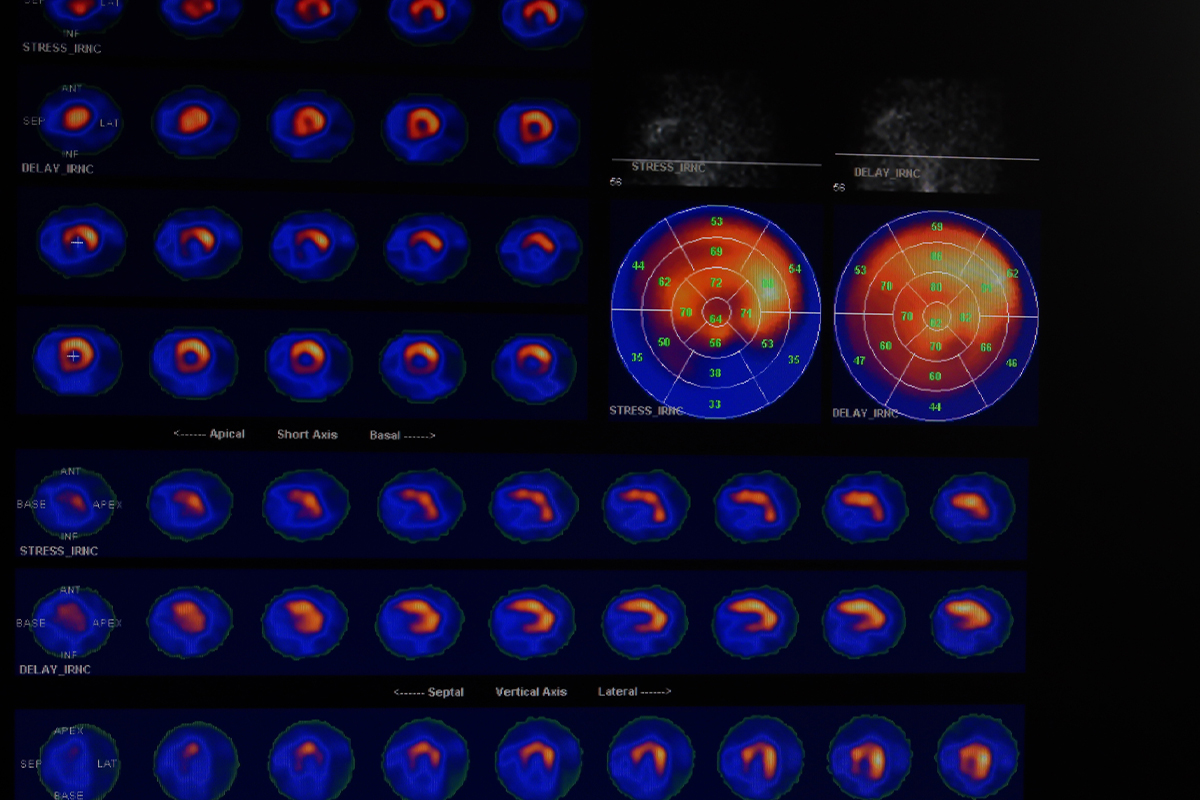
Single Photon Emission Computed Tomography (SPECT) Identifies:
- Areas of the heart with reduced blood flow
- How well the heart muscle is pumping
- Regions of the heart not receiving enough oxygen
- The impact of medications on blood circulation
- The effectiveness of surgical or interventional treatments
- Early signs of coronary artery disease or blockages
Why is Single Photon Emission Computed Tomography Done
Single photon emission computed tomography (SPECT) is performed to evaluate how well your heart is functioning and whether it is receiving enough blood. This advanced nuclear imaging test provides detailed information about blood flow and heart muscle performance, helping physicians detect problems early and guide treatment to prevent serious complications.
You may need a SPECT scan if:
- You experience chest pain, shortness of breath, or unexplained fatigue
- You have known or suspected coronary artery disease
- You need to evaluate the success of a prior treatment or procedure
- You are at higher risk for heart disease due to family history or other conditions
- You require a detailed assessment of how well your heart is pumping
What to Expect During Your SPECT Scan
When you arrive for your SPECT, we will first review your medical history and explain each step of the process. A small intravenous (IV) line is placed in your arm so we can inject a radioactive tracer. This tracer is a safe compound that binds temporarily to your red blood cells and heart muscle, allowing us to track blood flow. As it travels through your arteries, it highlights how well oxygen-rich blood is reaching different parts of your heart. You will then lie flat on a motorized table while a gamma camera rotates 180 to 360 degrees around your chest. The camera detects gamma rays emitted by the tracer and sends the signals to a computer that reconstructs 3D slice images of your heart. These let us see the pumping function and the circulation in exceptional detail. The scan is usually completed in 30 minutes.
Interpreting Your SPECT Scan Results
Once your SPECT scan is complete, our physicians carefully analyze the 3D images of your heart. We compare the distribution of the tracer throughout your heart muscle to determine whether blood flow is normal, reduced, or blocked in specific areas. We also evaluate how effectively your heart is pumping and whether certain regions are showing signs of damage. These findings allow us to identify coronary artery disease, assess the severity of blockages, and measure the impact of prior treatments or procedures. Based on your results, we create a personalized care plan that may include lifestyle recommendations, medications, or additional diagnostic testing. Our goal is to use the information from your SPECT scan to guide precise, proactive decisions that help you avoid more invasive procedures in the future.

SPECT FAQs
Is a SPECT scan safe?
Yes. The amount of radioactive tracer used is very small and considered safe for most patients. Your physician will review your medical history to ensure the scan is appropriate for you.
Do I need to do anything to prepare for a SPECT scan?
You may be asked to avoid caffeine, certain medications, and eating for a few hours before your scan. Our team will give you specific instructions based on the type of stress testing involved.
How often should I schedule a follow-up cardiology consultation?
Is a SPECT scan combined with a stress test?
Often, yes. Many SPECT scans are performed both at rest and after exercise or medication-induced stress to compare how your heart performs under different conditions.
Are there any side effects after a SPECT scan?
Precision Cardiology, Harvard-Trained
Dr. Sumita Paul is a Harvard-trained cardiologist with over 30 years of experience in cardiovascular medicine and preventive care. As a leading heart specialist in Los Angeles, she combines advanced diagnostics, evidence-based medicine, and personalized treatment strategies to help patients protect their heart health and live longer, stronger lives. At our cardiologist clinic in Los Angeles, Dr. Paul and her team offer comprehensive cardiac care, from early risk detection to long-term disease management, ensuring every patient receives the attentive, individualized treatment they deserve. Whether you’re managing an existing heart condition or focused on prevention, Dr. Paul’s expertise and compassionate approach make her one of the most sought-after cardiologists in the greater Los Angeles area.

Schedule Your Consultation
California Cardiac Institute is dedicated to combining advanced imaging technology with preventive cardiology to help you live a longer, healthier life. Our physicians use single photon emission computed tomography (SPECT) in Los Angeles to provide detailed insight into your heart’s function and circulation, ensuring early detection and precise treatment planning. We offer same-day appointments and gladly accept walk-ins to make care accessible when you need it most. Schedule your SPECT and take a proactive step toward protecting your heart.